
Transcript
Announcer:
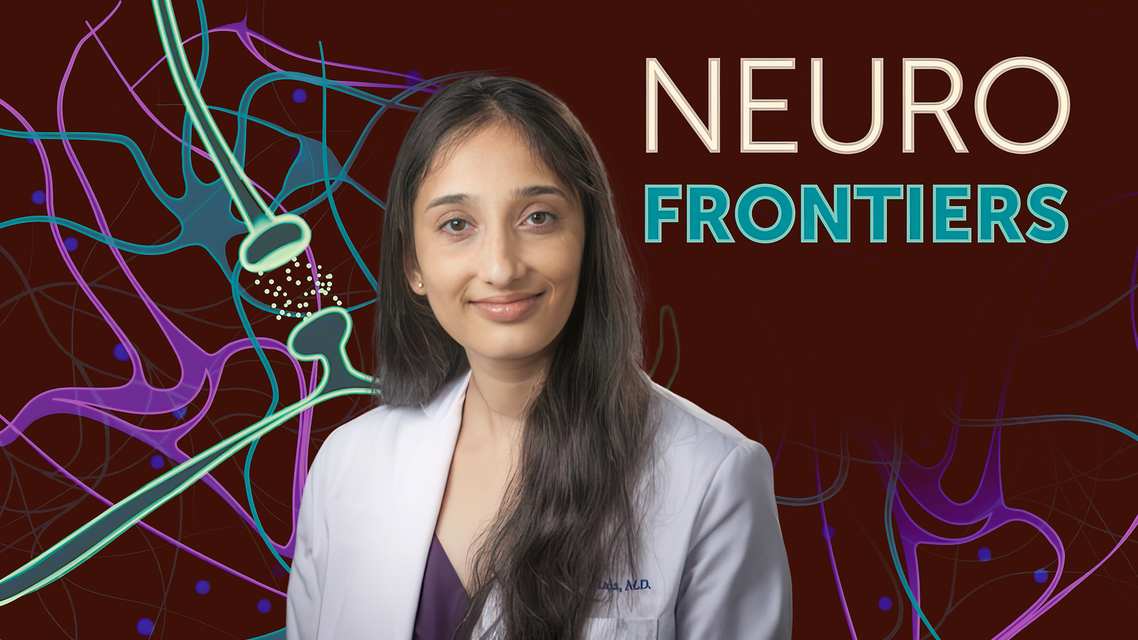
Welcome to NeuroFrontiers on ReachMD. Today, we’ll learn about advances in personalized myasthenia gravis care from Dr. Shruti Raja. Dr. Raja is an Associate Professor of Neurology at Duke Health in Durham, North Carolina, and she spoke about this subject at the 2026 AANEM Annual Meeting. Let’s hear from her now.
Dr. Raja:
The biggest shift that's happening right now is that the targeted therapies are being considered earlier, and they're being considered as alternatives to conventional immunotherapy—i.e., oral agents such as azathioprine, mycophenolate, tacrolimus, cyclosporine, or even methotrexate.
And I think the key here is that there's a recognition that, for some patients, some of these novel therapies may allow for faster disease control or lower doses long-term of some of the other oral immunosuppressive agents which may carry their own risk of complication.
Looking at the current pipeline, the biggest anticipation surrounds CAR T therapies, which really are designed to target T cells and B cells to reduce antibody production and overall immunologic response. So we can think of these therapies as rewiring the immune system so that it doesn't respond to something and doesn't react to the antibody's presence in the same way that it is.
So, I think, from my perspective, the question that we really need to answer is, how do we identify early on, at the time of diagnosis, which therapy is going to be most useful for which patient? If we think about this in the cancer world, we do this all the time. We send genetic testing to characterize what kind of mutations a particular malignancy has, and then therapy is often determined based upon the specific mutation.
I think, from an MG perspective, we need to be able to get to the point where we can say, "Okay, you have this type of antibody. It's working like this; therefore, this is the agent that we need to use."
Announcer:
That was Dr. Shruti Raja talking about how myasthenia gravis treatment is changing and improving. To access this and other episodes in our series, visit NeuroFrontiers on ReachMD.com, where you can Be Part of the Knowledge. Thanks for listening!