
Transcript
Announcer:
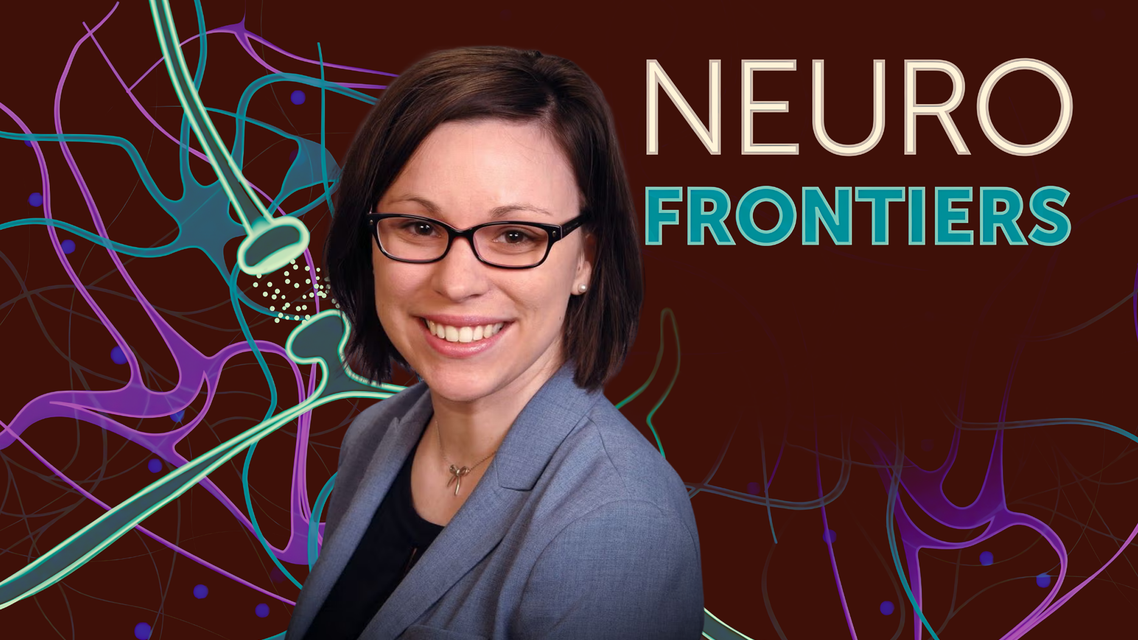
You’re listening to NeuroFrontiers on ReachMD. On this episode, we’ll hear from Dr. Elizabeth Gromisch, who’s a research neuropsychologist at the Joyce D. and Andrew J. Mandell Center for Comprehensive Multiple Sclerosis Care and Neuroscience Research at Mount Sinai Rehabilitation Hospital, Trinity Health of New England. She’ll be discussing practical strategies for implementing multiple sclerosis screening. Let's hear from her now.
Dr. Gromisch:
The National MS Society recommends that everyone should have a baseline cognitive screening with an annual visit thereafter using the same measure. So first is figuring out what's actually going to work in your clinic. Do you have time for something under five minutes, or are you able to build in more if you have an expanded appointment? The next is figuring out what you have in terms of resources. So if you don't have a lot of time or don't have staff who can give the measure, then something like the PST in the waiting room or when patients are brought back to the room and getting all set up—that may be a good time to give that the test there.
It's also going to be helpful from a workflow perspective if these tools are embedded into the electronic health record. So that might be setting something up on your end through your electronic health record to help with documentation. But there are more and more tools now that are looking at having EHR integration, so that way, when you finish the actual testing, it'll push it through to the electronic health record. Then, you’re also going to want to look at creating consistent documentation templates so you're writing the same thing every single time in how you're documenting what test you're giving, why you're giving it, and what the next steps are.
But I think a really important thing to always keep in mind, in a real-world setting is explaining to our patients why we're doing cognitive screenings. Cognition can be a very scary thing to talk about, and if it's not explained, patients may be less likely to want to do these cognitive screenings, or may be really frightened. But from my experience, explaining to people, "This is why we're assessing this. Some of this is going to be easy, some of this is going to be hard. It doesn't necessarily mean something's wrong. I'm just going to be challenging you today," that sets the stage that, “Okay, we're doing this as part of my care and making sure that I'm getting the services that I need.” And also including patients in the communication afterwards, so explaining what their results mean in lay terms and what's going to happen next, is also going to help with any buy-in if patients need further evaluation from a neuropsychologist or need referral for cognitive rehabilitation.
Announcer:
That was Dr. Elizabeth Gromisch discussing how we can implement cognitive screening for multiple sclerosis in real-world care. To access this and other episodes in our series, visit NeuroFrontiers on ReachMD.com, where you can Be Part of the Knowledge. Thanks for listening