
Transcript
Announcer:
Welcome to CE on ReachMD. This activity is provided by Global Learning Collaborativeand is part of our MinuteCE curriculum.
Prior to beginning the activity, please be sure to review the faculty and commercial support disclosure statements as well as the learning objectives.
Dr. Moody
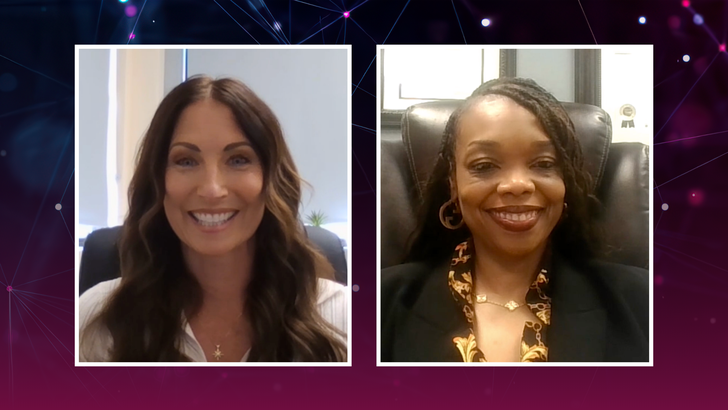
This is CE on ReachMD, and I'm Dr. Melissa Moody. Here with me today is Dr. Tracy Hicks. Our topic today is disparities in the diagnosis and care of tardive dyskinesia.
Tracy, can you tell us about those disparities, and where do you see them in your practice?
Dr. Hicks:
That's a great question, Melissa; and one that, wow, I know just from personal experience, we need to do better. These disparities are real, and they are layered. We see under-recognition in communities of color, in older adults, and in settings where time and resources are limited. There's also a bias component where movements may be misattributed or dismissed, and then there's access. Patients who may not have consistent follow-up, specialty care, or coverage for treatment. So what happens? TD goes unrecognized, undocumented, and untreated. And then from my lens, this is both a clinical and a systems issue, and if we're not intentional, we unintentionally perpetuate it.
Dr. Moody:
Tracy, I agree. I think even in my practice and in where I'm at, I have seen several times patients come in with symptoms of tardive dyskinesia that have been misdiagnosed. Sometimes if a patient has a substance use disorder, they'll attribute that to that history without exploring the history of being treated appropriately with antipsychotics or their exposure to dopamine receptor-blocking agents.
I also know that that access piece is a big part of it. We have a very large population of homeless individuals, patients who struggle with transportation. I think they're much less likely to get diagnosed. When they come in for care, I think everybody focuses on the really big issues, which might be their schizophrenia or bipolar disorder, making sure they're getting their basic needs met. But ignoring that tardive dyskinesia can really lead to problems down the road for those patients in terms of their ability to recover from those situations and get sustainable employment or have meaningful relationships even.
How can we do better? What do you think we need to do as providers, as clinicians, to kind of eliminate that? What can we do in those situations? How can we do better?
Dr. Hicks:
I think, Melissa, we need to remain curious. Ask questions. And it's okay not to know, but use your resources. Medications, they have pharmacy behind them, and you can use those resources, medical science liaisons. Educate yourself. Watch things like this, like this episode that we're doing, and we thank you for watching, but keep yourself informed and remain curious.
And of course, we have our actionable steps, okay. Standardized screening—make it a routine for every patient on dopamine receptor-blocking agents.
And then second, if you need to, use interpreters, use the caregivers, use culturally responsible communication, so patients can actually describe what they're experiencing. I talked about open-ended questions. Be okay with asking questions, and of course building that rapport.
And then third, you want to build workflows that support access. That may mean authorization, support care coordination, and leveraging team-based care, as we mentioned earlier. Equity doesn't happen by intention alone. It happens through structure—and a systemized structure.
Dr. Moody:
Tracy, those are wonderful points. I think we nailed it. Thanks for joining us. We'll see you next time.
Announcer:
You have been listening to CE on ReachMD. This activity is provided by Global Learning Collaborativeand is part of our MinuteCE curriculum.
To receive your free CE credit, or to download this activity, go to ReachMD.com/CME. Thank you for listening.
 In support of improving patient care, Global Learning Collaborative (GLC) is jointly accredited by the Accreditation Council for Continuing Medical Education (ACCME), the Accreditation Council for Pharmacy Education (ACPE), and the American Nurses Credentialing Center (ANCC) to provide continuing education for the healthcare team.
  Global Learning Collaborative (GLC) designates this activity for 1.00 contact hour(s)/0.10 CEUs of pharmacy contact hour(s).
  Global Learning Collaborative (GLC) has been authorized by the American Academy of PAs (AAPA) to award AAPA Category 1 CME credit(s) for activities planned in accordance with AAPA CME Criteria. This activity is designated for 1.00 AAPA Category 1 CME credit(s). Approval is valid until 05/14/2027. PAs should claim only the credit commensurate with the extent of their participation in the activity.