
Tardive dyskinesia (TD) remains significantly underdiagnosed and mismanaged despite clear guidelines. Early symptoms are often misattributed and standardized assessment tools go unused, leading to delayed detection and treatment. This ultimately contributes to substantial patient burden and is worsened by inequities in access to care, particularly among high-risk and underserved populations. Although VMAT2 inhibitors are recommended as first-line treatments, clinicians need practical guidance on individualized selection and use in complex cases. This series addresses these challenges by emphasizing standardized screening, improved diagnostic differentiation, more equitable care pathways, and evidence-based, patient-centered treatment strategies.
*Please stay tuned for additional content to this activity available for credit. The maximum amount of credit(s) available for the entire activity is 1.00.
Tardive Dyskinesia, Decoded: From Subtle Signs to Personalized VMAT2 Therapy
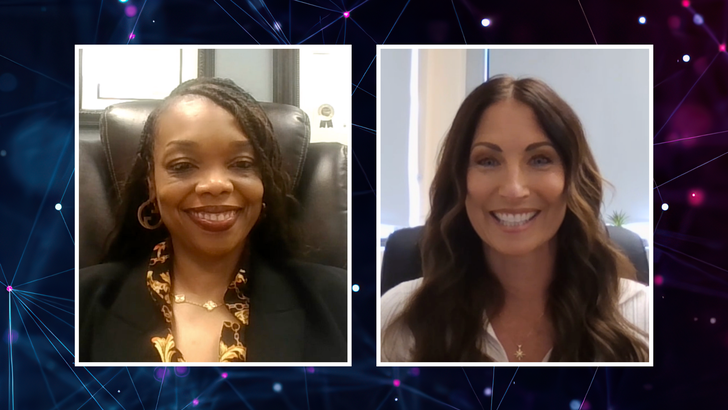
Overview
Disclosure of Relevant Financial Relationships
In accordance with the ACCME Standards for Integrity and Independence, it is the policy of Global Learning Collaborative (GLC) that faculty and other individuals who are in the position to control the content of this activity disclose any real or apparent financial relationships relating to the topics of this educational activity. GLC has full policies in place that have identified and mitigated financial relationships and conflicts of interest to ensure independence, objectivity, balance, and scientific accuracy prior to this educational activity.
The following faculty/staff members have reported financial relationships with ineligible companies within the last 24 months.
Faculty:
Tracy Hicks, DNP, MBA
Founder and CEO
Trilogy Outreach
Longview, TX
Consulting Fees: Alkermes, Bristol-Myers Squibb, Intracellular, Neurocrine, Teva
Melissa Moody, MD
Psychiatrist
Boone Memorial Health
Madison, WV
Consulting Fees: AbvVie, AxisOne, Bristol-Myers Squibb, Johnson and Johnson, Lundbeck, Neurocrine, Otsuka
Reviewers/Content Planners/Authors:- Tim Person has no relevant relationships to disclose.
- Wilma Guerra has no relevant relationships to disclose.
- Brian P. McDonough, MD, FAAFP has no relevant relationships to disclose.
Learning Objectives
Upon completion of this activity, learners should be better able to:
- Reduce under-recognition and diagnostic delays via standardized assessments, escalation rules, and time-bound confirmation
- Differentiate TD from other movement disorders using phenomenology, medication timing, and response patterns
- Standardize TD screening with routine intervals, trigger criteria, and consistent documentation
- Promote equitable access to TD diagnosis and ongoing care by streamlining coverage and referrals
- Apply real-world evidence on TD and VMAT2 inhibitors to clinical decisions for selection and monitoring
Target Audience
This activity has been designed to meet the educational needs of psychiatrist and neurologists as well as all other physicians, physician assistants, nurse practitioners, nurses, pharmacists, and healthcare physicians involved in managing patients with tardive dyskinesia.
Accreditation and Credit Designation Statements
 In support of improving patient care, Global Learning Collaborative (GLC) is jointly accredited by the Accreditation Council for Continuing Medical Education (ACCME), the Accreditation Council for Pharmacy Education (ACPE), and the American Nurses Credentialing Center (ANCC) to provide continuing education for the healthcare team.
Global Learning Collaborative (GLC) designates this enduring activity for a maximum of 1.00 AMA PRA Category 1 Credit(s)™. Physicians should claim only the credit commensurate with the extent of their participation in the activity.
Global Learning Collaborative (GLC) designates this activity for 1.00 nursing contact hour(s). Nurses should claim only the credit commensurate with the extent of their participation in the activity. Global Learning Collaborative (GLC) designates this activity for 1.00 contact hour(s)/0.10 CEUs of pharmacy contact hour(s).
The Universal Activity Number for this program is JA0006235-0000-26-046-H01-P. This learning activity is knowledge-based. Your CE credits will be electronically submitted to the NABP upon successful completion of the activity. Pharmacists with questions can contact NABP customer service (custserv@nabp.net). Global Learning Collaborative (GLC) has been authorized by the American Academy of PAs (AAPA) to award AAPA Category 1 CME credit(s) for activities planned in accordance with AAPA CME Criteria. This activity is designated for 1.00 AAPA Category 1 CME credit(s). Approval is valid until 05/14/2027. PAs should claim only the credit commensurate with the extent of their participation in the activity.
 Provider(s)/Educational Partner(s)

Global Learning Collaborative (GLC) designs and executes continuing education rooted in evidence-based medicine, clinical need, knowledge gap analysis, and careful consideration of learner feedback. Our mission is to serve as an inventive and relevant resource for clinical content and educational interventions across a broad spectrum of specialties. GLC’s methodology is founded on a commitment to continuing medical education and the innovative assessment of its effects on clinical practice. Our goal is clear—to develop and deliver the best education in the most impactful manner and to verify its results with progressive outcomes research.Commercial Support
This activity is supported by an independent educational grant from Neurocrine Biosciences, Inc.
Disclaimer
The views and opinions expressed in this educational activity are those of the faculty and do not necessarily represent the views of GLC. This presentation is not intended to define an exclusive course of patient management; the participant should use his/her clinical judgment, knowledge, experience, and diagnostic skills in applying or adopting for professional use any of the information provided herein. Any procedures, medications, or other courses of diagnosis or treatment discussed or suggested in this activity should not be used by clinicians without evaluation of their patients’ conditions and contraindications or dangers in use, review of any applicable manufacturer’s product information, and comparison with recommendations of other authorities. Links to other sites may be provided as additional sources of information.
Reproduction Prohibited
Reproduction of this material is not permitted without written permission from the copyright owner.System Requirements
- Supported Browsers (2 most recent versions):
- Google Chrome for Windows, Mac OS, iOS, and Android
- Apple Safari for Mac OS and iOS
- Mozilla Firefox for Windows, Mac OS, iOS, and Android
- Microsoft Edge for Windows
- Recommended Internet Speed: 5Mbps+
Publication Dates
Release Date:
Expiration Date: