Transcript
Announcer:
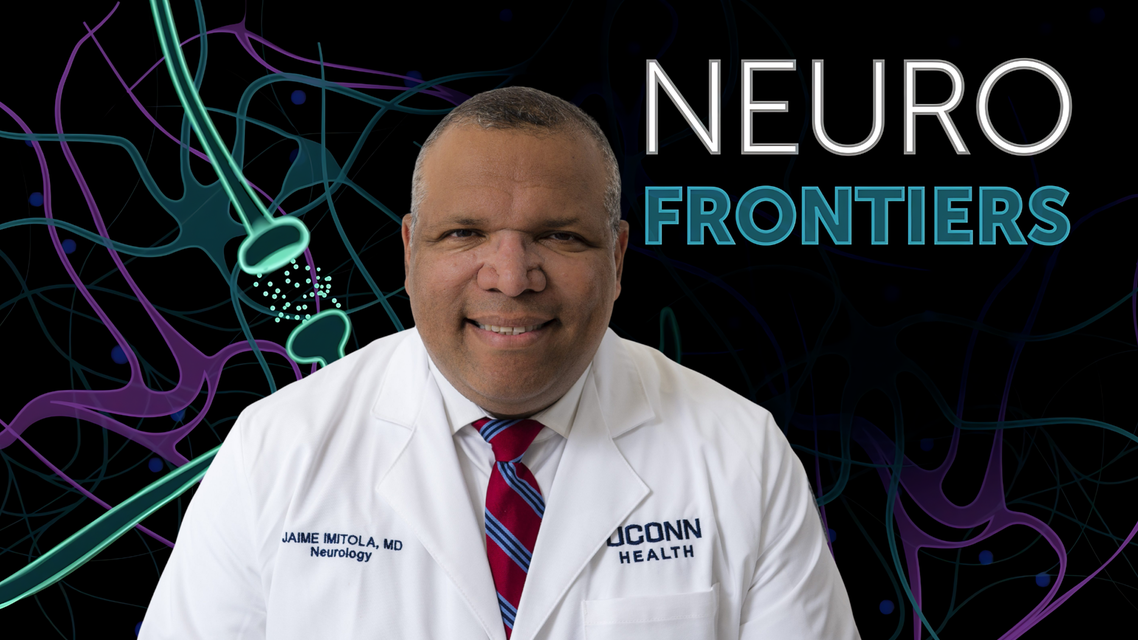
Welcome to NeuroFrontiers on ReachMD. On this episode, we’ll hear from Dr. Jaime Imitola, who’s the Vice Chair for Research of the Department of Neurology and the Director of the Division of Multiple Sclerosis and Translational Neuroimmunology at UConn Health. He’ll be explaining how clinicians can navigate approved, investigational, and unproven stem cell therapies, which he also discussed at the 2026 Consortium of Multiple Sclerosis Centers Annual Meeting. Here’s Dr. Imitola now.
Dr. Imitola:
One of the most important issues in the world of stem cells is what we do in the laboratories and clinical trials and the reality for the patient. So still there's a lot of work to be done, and we can differentiate the effort into proof products—stem cell products, right? These are already approved after multiple years of clinical trials that show that the cells are not only safe but also effective. You also have investigational products that are under investigation but not yet approved. And finally, the reality of the stem cells for many of our patients is the so-called “unproven” stem cells.
So at the moment, there is an increase in clinics, not only in the United States but around the world, that are trying to sell some products that they call “stem cell therapies.” But in reality, these are not tested, not investigated, and unproven. So what does it mean for patients? In the meantime, we are trying to solve the significant challenges to bring the stem cells to the actual bedside. There are other actors that are doing this work of trying to sell unproven procedures in the name of stem cells that actually are causing harm to the patients.
So the patients and clinicians need to work together to try to understand their needs. There are many patients going to clinics and MS centers in the country asking, "Hey, doc, what about stem cells?" And the doctor should be able to differentiate between what is approved, what is investigational, and what is not approved. The outcomes of the unproven stem cell therapy world, or stem cell tourism, are actually very significant, not only for the safety of the patient, but also financially. Many patients go to many places around the world and get no real therapy. They get some products that are not really approved, and they are called stem cells, and they don't have any benefit at the end. But they get enticed to go to those places because they have great, very flashy websites, and also they have testimonials of other patients or famous people who are getting these treatments. But in reality, that's not approved, and it's not rigorous.
I am the chair of education committee for the International Society for Stem Cell Research, and over the last four years, we have worked to generate educational material not only for patients but also for clinicians. And recently, we generated two courses that are free and are made by experts around the world to try to educate clinicians about stem cells so they are more in tune and capable of having a conversation with patients about what is approved, what is investigational, and what ii stem cell tourism. The courses are being organized and developed by the International Society of STEM Cell Research and Harvard Medical School, and they are free for all.
Announcer:
That was Dr. Jaime Imitola talking about how we can navigate approved and unregulated stem cell treatments in multiple sclerosis. To access this and other episodes in our series, visit NeuroFrontiers on ReachMD.com, where you can Be Part of the Knowledge. Thanks for listening!