Transcript
Announcer:
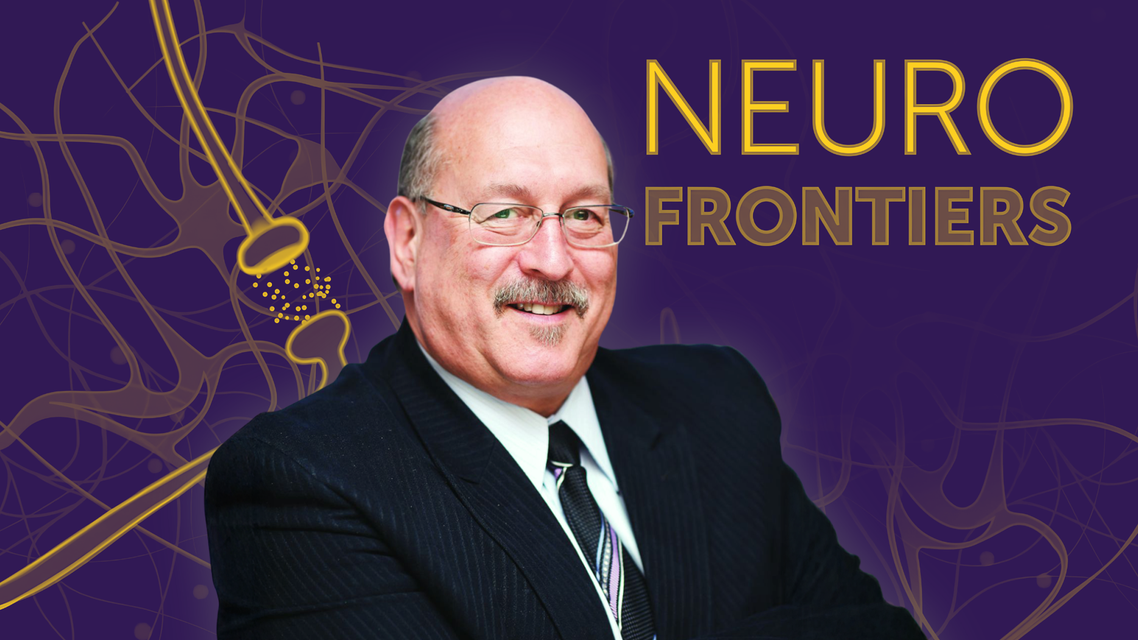
You’re listening to NeuroFrontiers on ReachMD. On this episode, we’ll hear from Dr. Mark Freedman, who’s a Professor of Medicine in Neurology at the University of Ottawa and a Senior Scientist at the Ottawa Hospital Research Institute. He’ll be sharing insights on cell-based therapies for multiple sclerosis, a topic he discussed at the 2026 Consortium of Multiple Sclerosis Centers Annual Meeting. Here’s Dr. Freedman now.
Dr. Freedman:
Cell-based therapies, compared to disease-modifying therapies, are really looking at the biological type of therapeutic responses that people can get from their own bodies. Our own immune system is capable of healing and controlling disease, and all we're doing is exploiting that ability by trying to obtain cells that are capable of doing this.
Cell-based therapies are of two forms. One is replacement, and the other is, can we modify cells to do something that they maybe don't normally do? In the case of replacement, in very aggressive forms of multiple sclerosis, we go as far as removing the entire immune system and replacing it through stem cells. Otherwise, the patient would die from the combined immunotherapy and immunoablative therapy, which destroys your immune system that we think is causing all the disease. So, we can replace the entire immune system, and we grow it from their own stem cells. Those cells are really not necessarily doing anything, but they're replacing the immune system, which had to be removed due to causing all the bad disease.
But in recent years, some cells can actually be encouraged to do other things. The mesenchymal stem cells are also derived from bone marrow, and if we culture them, there may be an ability for these cells to actually go into the body, seek out areas of damage, and repair them. Attempts to try to do that in MS have not necessarily been successful, but there's lots of reasons why that might be. But nevertheless, that still remains an open area of research.
The most exciting one is more recent—these so-called CAR T-cells. You can manipulate the receptors on the cells to actually bind things that they don't normally do. And in the case of the most common CAR T, it's directed against one of the proteins on the B cells. So, it's a very modified form of B-cell depleting therapy, which is very expensive to do and sometimes can be made from a patient's own cells. There's lots of companies that actually make these cells and put them in, but they're really at their infancy.
Announcer:
That was Dr. Mark Freedman discussing the mechanisms behind cell-based multiple sclerosis therapies. To access this and other episodes in our series, visit NeuroFrontiers on ReachMD.com, where you can Be Part of the Knowledge. Thanks for listening!