
Transcript
Announcer:
Welcome to CE on ReachMD. This activity is provided by TotalCME. This episode is part of our MinuteCE curriculum.
Prior to beginning the activity, please be sure to review the faculty and commercial support disclosure statements as well as the learning objectives.
Dr. Weihl:
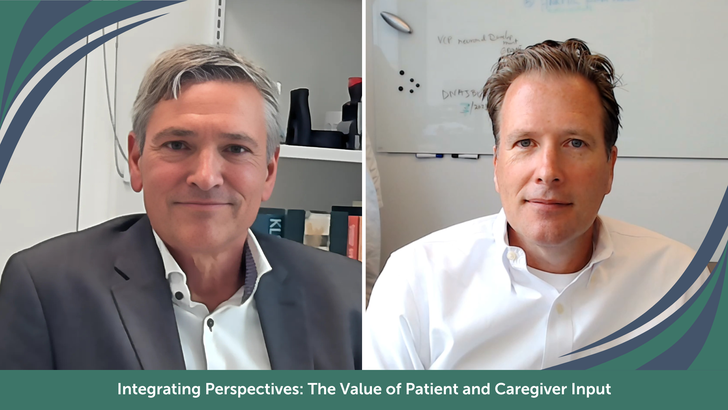
This is CME on ReachMD. My name is Conrad Weihl.
Dr. Vissing:
And I'm John Vissing.
Dr. Weihl:
And today, we're going to have a quick discussion about some of the current gaps in early recognition of limb-girdle muscular dystrophy 2I/R9, as well as how that relates to access to care, access to genetic testing, and just hear Dr. Vissing's experience.
Dr. Vissing:
Well, I mean, certainly, this was a problem in the past, and many of these patients were misdiagnosed, as, for instance, Becker muscular dystrophy patients. We did a study ourselves, and there were surprisingly so many patients who were misdiagnosed. And this is like 20 years ago.
Obviously, with the advent of genetic testing and the access to genetic testing, and it's actually a fairly easy gene to sequence, as well, this has become less of a problem, at least in more industrialized countries. In other parts of the world, obviously, this is still a problem. If you don't have access to [genetic testing], you would then still rely on muscle biopsies and Western blots and so on. But I think, all in all, we have come extremely far in identifying patients with this disease.
Dr. Weihl:
I guess I think some of the challenges with diagnosis relates to knowledge of the disease and patients not recognizing that their weakness could be related to a disease. And I think in many of the diseases, we're going to want earlier and earlier diagnosis. And I see challenges with patients and not recognizing that their weakness is really potentially a pathologic weakness, and I also see challenges with primary care physicians who don't fully recognize.
Do you have that same experience, John?
Dr. Vissing:
Yes, I totally agree. The patient delay really matters here. And along the way, patients still get referred to liver specialists because their transaminases are elevated and of course, this is just because of the muscle disease. If they had measured the CK, they would have known.
We still see this happening. So I agree. It's not perfect, but we still have come a long way, I think, with the genetic testing these days.
Dr. Weihl:
You see, the other challenge I see is indeterminate genetic testing. So definitely, if the genetic test result is done and it's a clear pathogenic variant, I call that a slam dunk diagnosis. But there are times where patients live in this kind of area of limbo, where they have variants that are unique to them. They may not have had a muscle biopsy. They may not have been to a specialist center. And I still see a challenge, even with people in our own field that are specialists, who don't fully understand the limitations of genetic testing. When variants are identified that might be, what we call, variants of unknown significance or when they find one variant and they don't find a second variant, whether they should be pursuing a muscle biopsy, how they should move forward with that.
Dr. Vissing:
I agree with that. I mean, I think this problem is a huge problem in many other muscle diseases, where, especially when you have very large genes and you find many variants of unknown significance. The problem is somewhat smaller for this particular disease because the gene is very small, and by far, most of the patients have known mutations. But of course, I agree, it happens.
Dr. Weihl:
I think the other thing that helps is a muscle biopsy. It's a very clear disease, where you can understand the – if you do have variance and you're confused, a muscle biopsy usually can sort that out because of the reduction in alpha-dystroglycan.
Dr. Vissing:
I totally agree.
Dr. Weihl:
Great. Well, I think our time’s up. It was a great discussion. And thanks to the audience for tuning in.
Announcer:
You have been listening to CE on ReachMD. This activity is provided by TotalCME and is part of our MinuteCE curriculum.
To receive your free CE credit, or to download this activity, go to ReachMD.com/CME. Thank you for listening.