
CHOICE-2 Trial: Intra-Arterial Alteplase After Thrombectomy
06/23/2026
Key Takeaways
- Adjunctive intra-arterial alteplase after thrombectomy was associated with more patients reaching mRS 0 or 1 at 90 days.
- Lower residual hypoperfusion on follow-up CT perfusion was reported with adjunctive alteplase.
- Symptomatic intracranial hemorrhage was not significantly different.
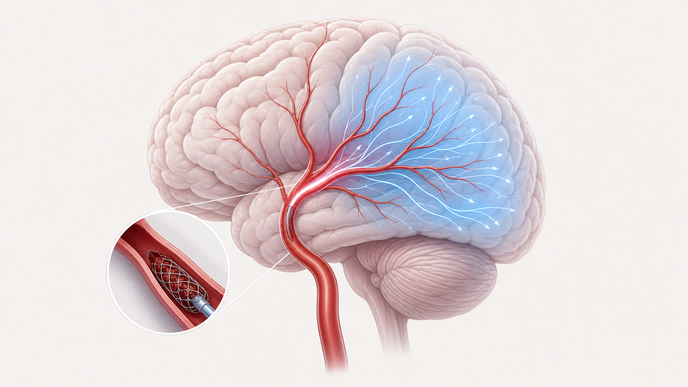
The randomized, open-label, multicenter clinical trial with blinded outcome assessment was conducted at 14 stroke centers in Spain from December 11, 2023, through November 26, 2025. It enrolled 440 patients with acute ischemic stroke due to large vessel occlusion who were treated with thrombectomy within 24 hours and achieved eTICI 2b50 to 3 after thrombectomy. Patients were assigned to thrombectomy plus intra-arterial alteplase 0.225 mg/kg, maximum 20 mg, infused over 15 minutes, or to thrombectomy alone.
At 90 days, 123 of 214 patients given adjunctive alteplase and 93 of 219 assigned to thrombectomy alone had mRS scores of 0 or 1. That corresponded to an adjusted risk difference of 15.0%, with a 95% CI of 5.7% to 24.3% and P = .002. Residual hypoperfusion on follow-up CT perfusion occurred in 28.6% of the alteplase group and 50.5% of the control group, for an adjusted risk difference of −22.0% with a 95% CI from −31.5% to −12.4% and P < .001. In this population, adjunctive alteplase was associated with more patients reaching excellent functional recovery and with less residual hypoperfusion on follow-up CT perfusion.
Symptomatic intracranial hemorrhage occurred in 1.4% (3/214) with adjunctive alteplase and 0.5% (1/219) with thrombectomy alone. The adjusted odds ratio was 3.10 with a 95% CI of 0.32 to 30.0, and this difference was not significant. Ninety-day mortality was 12.1% (26/214) in the alteplase group and 6.4% (14/219) with thrombectomy alone. The adjusted risk difference for death was 5.9%, with a 95% CI of 0.5% to 11.3% and P = .03. Adjunctive intra-arterial alteplase was associated with better 90-day functional outcomes without a significant symptomatic hemorrhage increase, while higher mortality was also observed.